
The Decision You’re Not Making
Leadership is, at its core, a series of decisions. Every strategy chosen, every hire made, every pivot taken or avoided — all of it flows from a single defining act: the moment a leader decides.
And yet, for all the time organizations invest in developing leaders — communication workshops, culture summits, executive coaching programs — remarkably little attention is paid to the actual mechanics of how decisions get made. We assume competence. We reward confidence. We rarely examine the cognitive machinery underneath.
That oversight is costly. Research across behavioral economics, cognitive neuroscience, and organizational psychology has made one thing undeniable: the human mind, as brilliant as it is, is a deeply flawed decision-making instrument. We are subject to bias, distorted by emotion, misled by overconfidence, and blinded by the information we already believe to be true. Without frameworks, without discipline, without self-awareness — our decisions can be sophisticated-sounding guesses at best.
The leaders who consistently outperform over time are not simply smarter or luckier. They think differently about how they think. They’ve invested in understanding judgment — and they’ve built systems around it. In an era defined by information overload, algorithmic complexity, and escalating stakes, decision intelligence has become the meta-skill that drives every other leadership capability.
Every competitive advantage, every margin improvement, every transformation initiative ultimately lives or dies on the quality of the decisions behind it.
The ten books below represent the most important body of work on this subject. They span cognitive science, philosophy, psychology, strategy, and hard-won practical wisdom. Read any one of them and you’ll see the world more clearly. Read all ten, and you’ll never make an important decision the same way again.
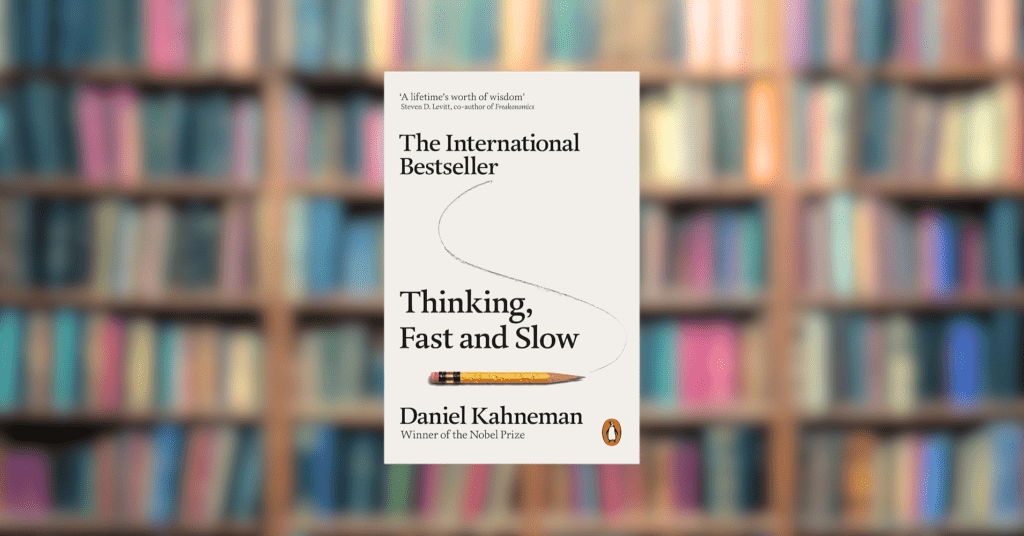
1. Thinking, Fast and Slow — Daniel Kahneman
No book has done more to democratize the science of human judgment than this one. Kahneman, the Nobel laureate in behavioral economics, presents decades of landmark research through the now-famous lens of System 1 and System 2 thinking — the fast, intuitive, automatic mind versus the slow, deliberate, effortful one. The tension between these two systems explains an astonishing range of cognitive errors: anchoring, availability bias, framing effects, overconfidence, and the planning fallacy, among many others.
What makes this book essential for leaders is not its catalog of failures — it’s its humility. Kahneman does not promise that awareness will cure bias. He concedes that even knowing these patterns well does not make you immune. What it does is make you a more careful architect of the conditions in which decisions are made. For any leader who has ever wondered why smart people keep making predictable mistakes, this is the place to begin.
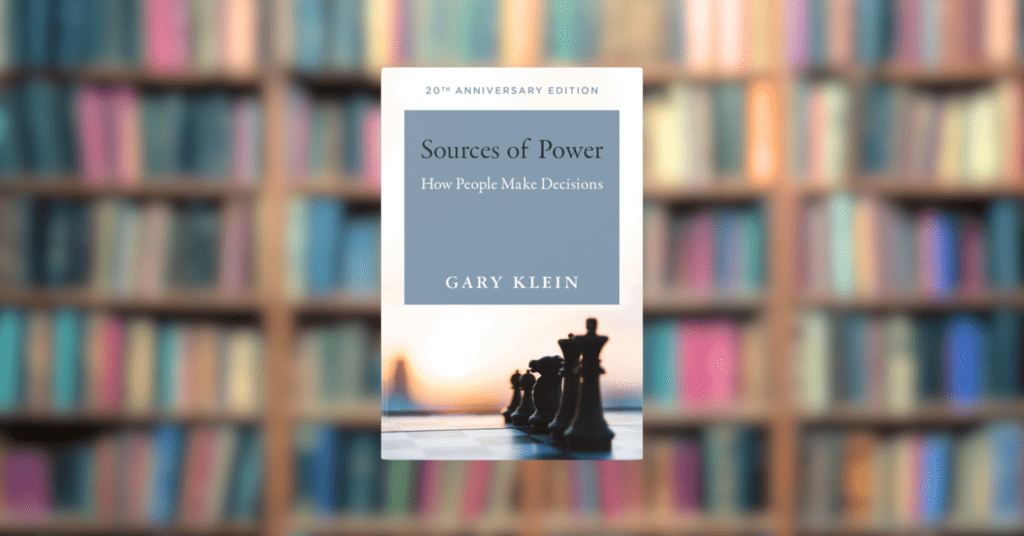
2. Sources of Power: How People Make Decisions — Gary Klein
Where Kahneman illuminates the ways intuition can mislead us, Gary Klein makes the case for its power. Klein spent years studying how expert decision-makers — firefighters, military commanders, emergency room physicians — make life-or-death calls under extreme time pressure and uncertainty. What he found upended the prevailing assumption that good decisions require exhaustive analysis of alternatives.
Through his Recognition-Primed Decision model, Klein shows that experts don’t compare options — they recognize situations and act. They’ve built rich pattern libraries through experience, and they draw on those libraries in real time. The implication for leadership is profound: expertise is not just knowledge, it’s a form of perception. This book is the necessary counterweight to Kahneman, and together they offer the most complete picture of human judgment available.
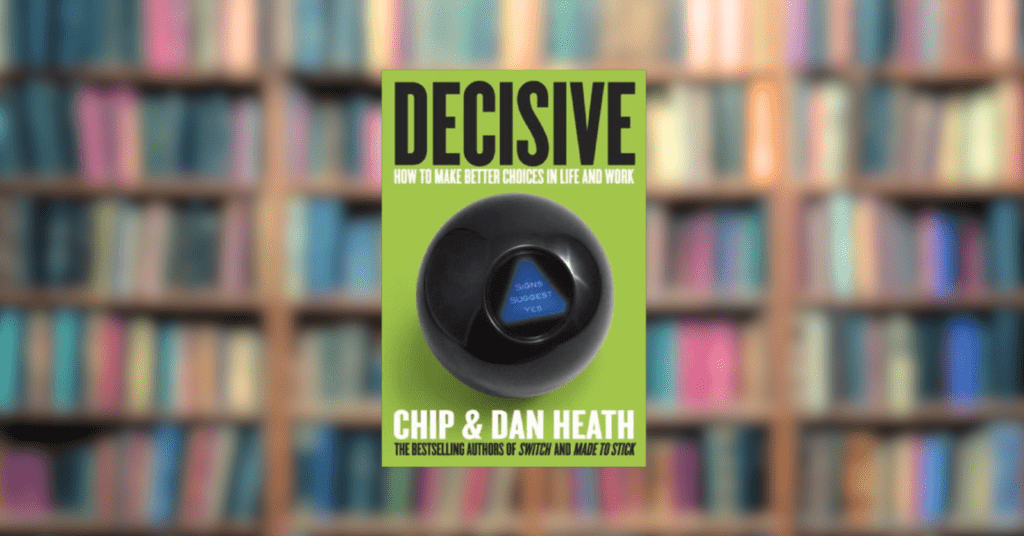
3. Decisive: How to Make Better Choices in Life and Work — Chip Heath & Dan Heath
The Heath brothers have a gift for translating research into actionable practice, and Decisive is perhaps their finest work. Built around the WRAP framework — Widen your options, Reality-test your assumptions, Attain distance before deciding, Prepare to be wrong — the book offers a practical system for countering the four most common decision-making villains: narrow framing, confirmation bias, short-term emotion, and overconfidence.
What distinguishes this from other behavioral science books is its relentless practicality. Each chapter is grounded in real cases and ends with usable tools. Leaders who want to operationalize better decision hygiene — not just understand it conceptually — will find this the most immediately applicable book on the list.
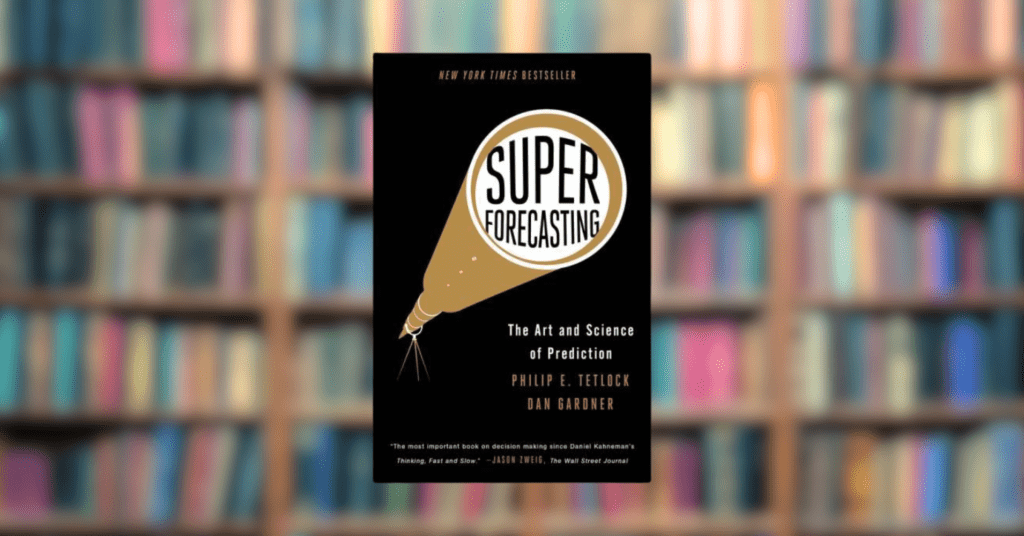
4. Superforecasting: The Art and Science of Prediction — Philip Tetlock & Dan Gardner
Tetlock’s decades-long research program on forecasting accuracy produced one of the most sobering findings in social science: most experts are no better at predicting the future than chance. But a small group — the superforecasters — consistently outperform both experts and statistical models. This book reveals exactly how they do it.
The answer is less about raw intelligence and more about mindset and method. Superforecasters decompose problems, update their beliefs as new evidence arrives, actively seek out disconfirming information, and think in probabilities rather than certainties. For leaders making strategic bets under uncertainty, this book reframes what good judgment actually looks like — and offers a replicable model for building it in yourself and your team.
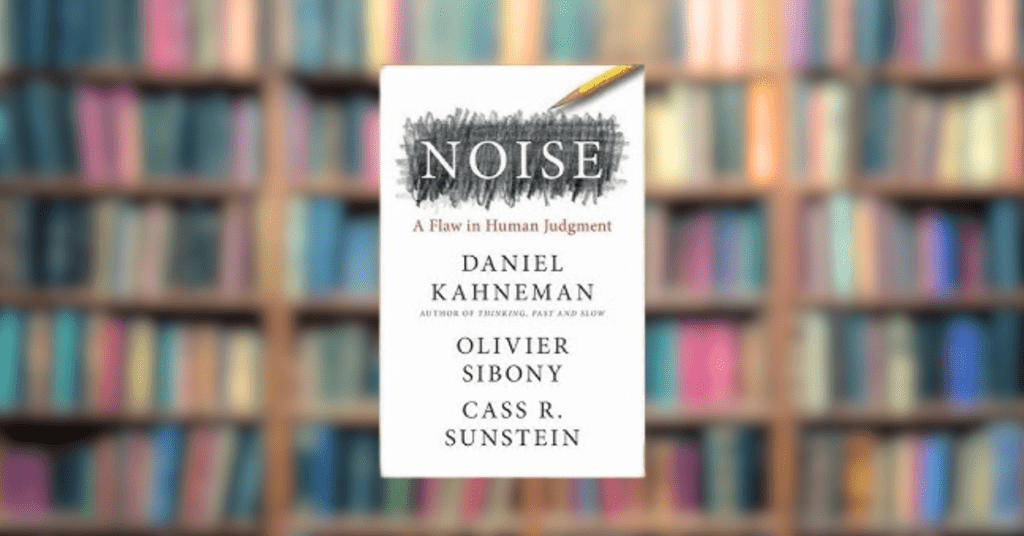
5. Noise: A Flaw in Human Judgment — Daniel Kahneman, Olivier Sibony & Cass R. Sunstein
If Thinking, Fast and Slow is Kahneman’s masterwork on bias, Noise is his essential sequel. While bias refers to systematic error — the mind reliably pulling in the wrong direction — noise refers to random variability in judgment. Two doctors examining the same patient. Two judges sentencing the same crime. Two managers evaluating the same candidate. The differences in their decisions are often shocking, and those differences are not fully explained by bias. They are noise.
For organizational leaders, this is critical reading. Most decision processes in organizations are far noisier than anyone realizes — and that variability is costing them money, talent, and trust. The book’s proposed remedy, including structured judgment protocols and what the authors call decision hygiene, offers a practical architecture for reducing that variability in high-stakes choices.
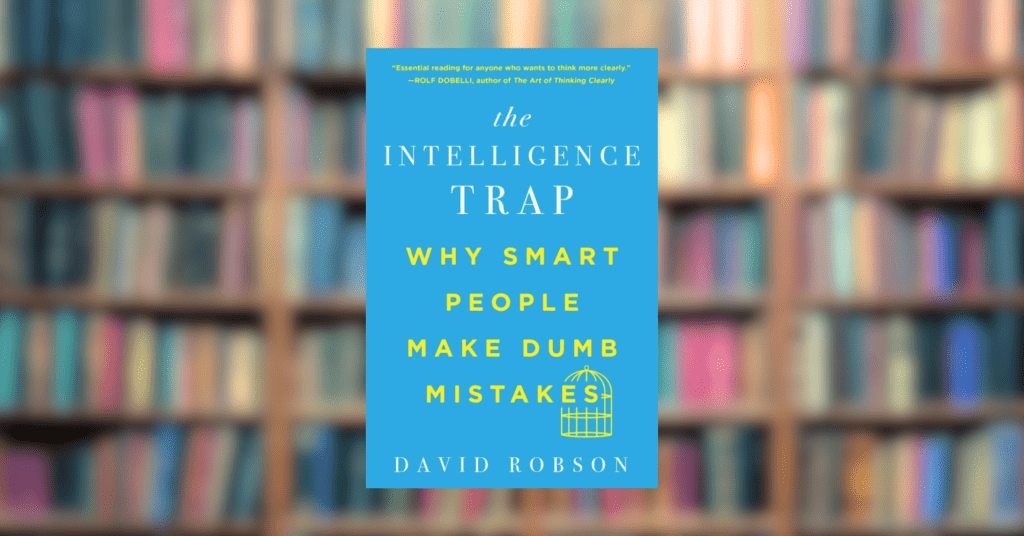
6. The Intelligence Trap — David Robson
One of the most counterintuitive books on this list: high intelligence, without the right epistemic habits, can actually make you a worse decision-maker. Robson documents the surprising phenomenon he calls dysrationalia — the tendency of highly intelligent, highly educated people to reason poorly because they’ve developed a talent for rationalizing what they already believe rather than genuinely interrogating it.
The antidote he proposes draws on the emerging science of evidence-based wisdom — intellectual humility, actively open-minded thinking, and the cultivation of what the ancient Greeks called phronesis, or practical wisdom. For leaders who have been told their whole careers that they’re the smartest person in the room, this book is a necessary reckoning. Brilliance is not a decision-making strategy.
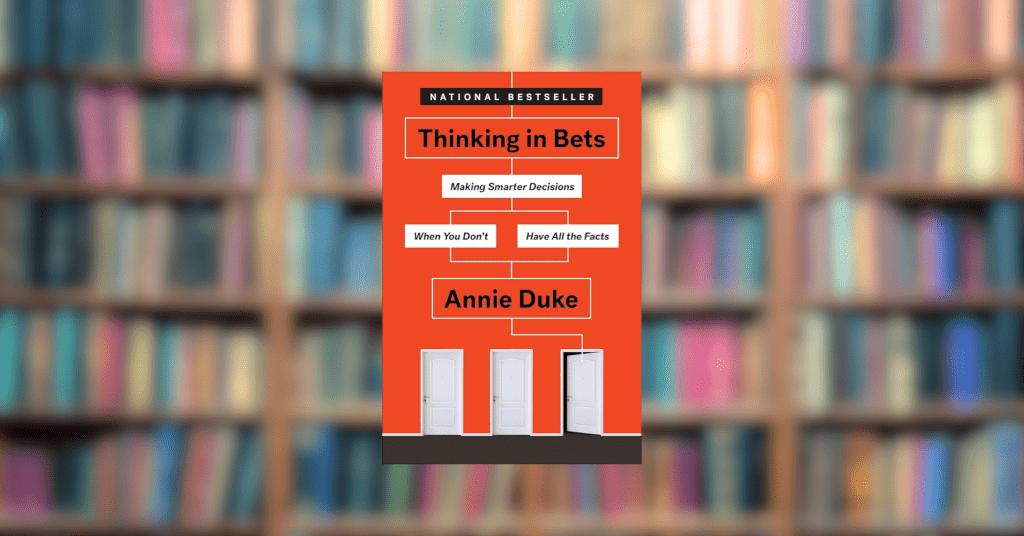
7. Thinking in Bets: Making Smarter Decisions When You Don’t Have All the Facts — Annie Duke
Annie Duke brings a poker player’s hard-won clarity to one of the most pernicious traps in leadership: resulting — the tendency to judge the quality of a decision by its outcome rather than the quality of the reasoning that produced it. A good decision can produce a bad outcome. A bad decision can produce a good outcome. Confusing the two corrupts the feedback loops that should be making you smarter over time.
Duke’s framework for thinking in probabilities — acknowledging uncertainty, separating luck from skill, and building a culture of honest after-action review — is immediately applicable to any leader who wants to build a learning organization rather than a culture of blame and false certainty. Lucid, practical, and consistently surprising.
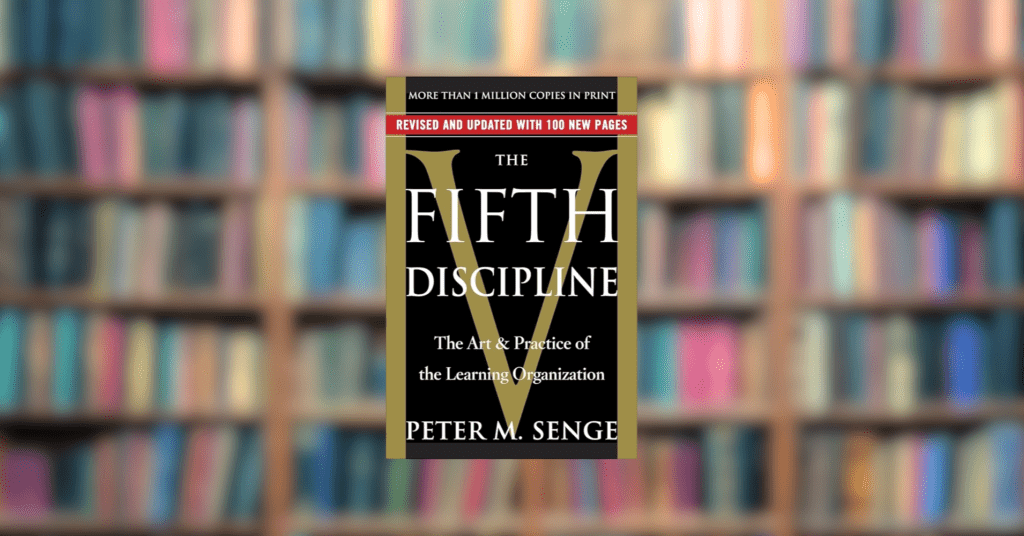
8. The Fifth Discipline: The Art and Practice of the Learning Organization — Peter Senge
Senge’s foundational work belongs on this list because it makes the case that decision-making is never purely individual — it is shaped by the mental models, system structures, and organizational dynamics that surround the decision-maker. The discipline of systems thinking, which sits at the heart of the book, trains leaders to see the feedback loops, delays, and unintended consequences that make organizational decisions so reliably difficult.
More than thirty years after its first publication, The Fifth Discipline remains startlingly relevant. The leaders who grasp systems thinking make fundamentally different decisions — they intervene in different places, resist symptomatic solutions, and build organizations that learn from their choices rather than repeat them. For any leader trying to move from reactive problem-solving to genuine strategic foresight, this is the architecture underneath the capability.
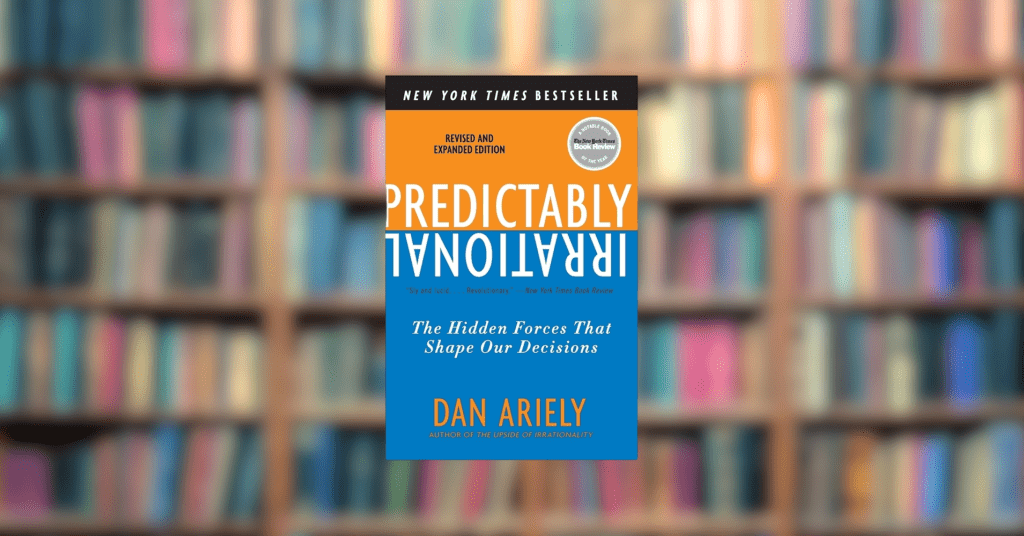
9. Predictably Irrational: The Hidden Forces That Shape Our Decisions — Dan Ariely
Ariely’s work sits at the intersection of behavioral economics and everyday life, revealing that our irrational behaviors are not random — they are systematic, predictable, and deeply embedded in how markets, organizations, and relationships function. From the distorting power of “free” to the anchoring effects of arbitrary numbers, Ariely shows that the forces shaping our choices are far less rational than we like to assume.
For leaders, the particular value here is in understanding how the environments they design — the choices they frame, the defaults they set, the anchors they introduce — powerfully shape the decisions of everyone around them. Decision architecture is leadership architecture. This book makes that connection vivid and undeniable.
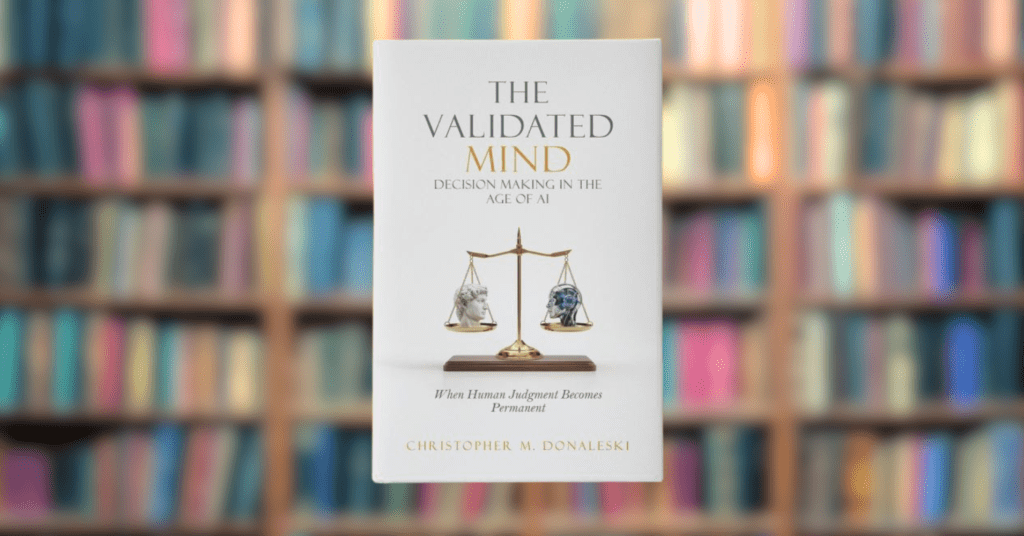
10. The Validated Mind, Decision Making in the Age of AI — Christopher Donaleski
The nine books above mapped the terrain of human judgment with extraordinary rigor. They diagnosed the problem from every angle — cognitive, behavioral, organizational, systemic. What they collectively left, in many ways, was the practitioner’s question: So what do I actually do?
The Validated Mind is the answer built for the business owner and executive who is making high-stakes calls every single week with incomplete information, competing priorities, and real consequences. But it begins somewhere the others don’t: with the recognition that the most dangerous decisions aren’t the ones made poorly — they’re the ones that stop being made at all.
As AI and automation transfer human judgment into systems that operate continuously and without pause, the window for reflection closes. What was once a decision becomes a default. What was once revisable becomes infrastructure. Donaleski’s central argument is that organizations need a discipline for examining judgment before it becomes permanent — and that most don’t have one.
At the core of the book is the VALID Framework — a five-dimension model for decision validation that makes the assumptions behind high-stakes choices visible at the moment that matters most: before execution. Where Kahneman identifies bias, VALID builds a practice of verification. Where Klein honors expertise, VALID creates a structure for translating pattern recognition into defensible judgment. Where Tetlock demands calibrated uncertainty, VALID operationalizes intellectual humility as a leadership competency.
Readers who take the self-assessment will find their own Validator Profile — a map of which validation forces most shape their confidence, and where their blind spots are likely to live. It is one of the more useful acts of self-awareness a leader can undertake.
If the nine books before this one convinced you that decision quality matters more than almost anything else in leadership, The Validated Mind gives you the system to do something about it — starting today.
The Compounding Return on Better Decisions
There is a quiet asymmetry at the heart of leadership performance. Most organizations invest heavily in execution — systems, processes, training, technology — and invest almost nothing in the upstream act that drives all of it: the quality of the decisions that set execution in motion.
The ten books on this list are a corrective. Taken together, they offer something rare: a genuinely comprehensive education in human judgment — its architecture, its failure modes, its conditions of excellence, and its remarkable potential for disciplined improvement. Kahneman and Klein show you the terrain from opposite sides of the same mountain. Tetlock and Duke teach you to think in probabilities. The Heaths give you the workflow. Senge gives you the systems lens. Ariely reveals the hidden architecture of choice. Robson warns you about the trap of your own intelligence. And The Validated Mind hands you the framework to put it all to work — not as theory, but as practice embedded in the actual rhythms of how you lead.
The leaders who will define the next decade are already doing this work. They’re building decision intelligence as a core organizational capability, not leaving it to chance, personality, or the heroics of a single visionary. They understand that in a world of accelerating complexity, the decisive advantage belongs not to those who have the most information, but to those who have the best system for acting on it wisely.
Start with any book on this list. Then give it to your team. The conversation that follows may be the best decision you make this year.